

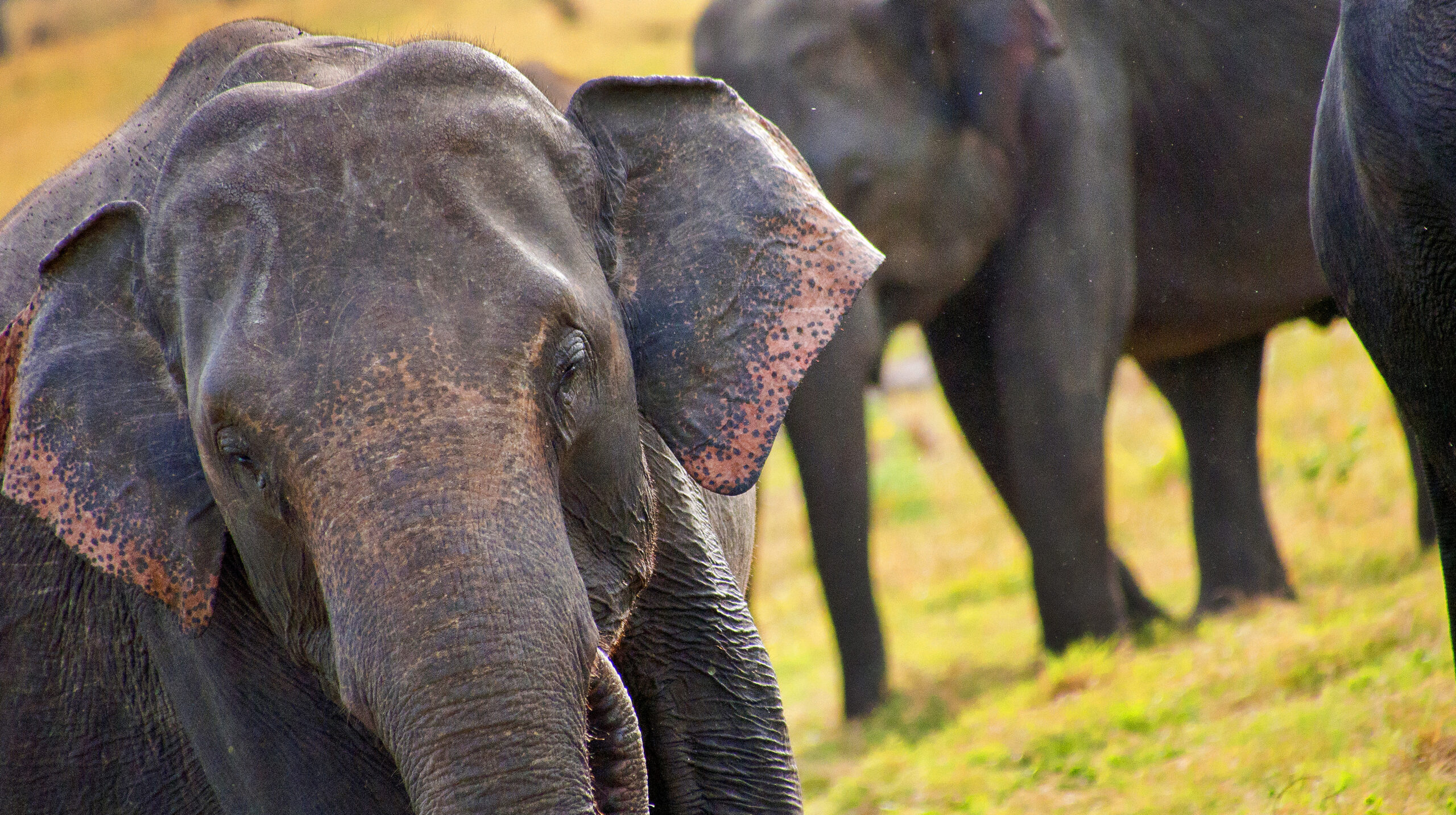
For many years, the people living around Galgamuwa and Ambanpola had known him well.
He was not part of a large herd. He walked alone — a single male elephant, strong, silent, and unforgettable. Among the villagers, he had earned a simple name: “Kalu Aliya” — the Black Elephant — because his skin was darker than most other elephants seen in the area.
But it was not only his dark body that made him easy to recognize. He also had a hole in one earlobe, a mark that made him stand out instantly to anyone who had seen him before.
Year after year, Kalu Aliya wandered through the lands around Galgamuwa and Ambanpola, following the routes that elephants have used for generations. To some, he was a familiar sight. To others, he was a mysterious wanderer of the night — appearing quietly, crossing roads, passing fields, and disappearing once again into the wilderness.
On 17 September 2025, he was seen at Getadiwula, Kasikote, captured in a moment that reflected both his power and his vulnerability. As he crossed the road, he looked every bit the king of the wild — large, dark, and calm, carrying the dignity of an animal that has learned to survive in a world increasingly shared with humans.


WelcRimply dummy text of the printing and typesetting industry. Lorem Ipsum has been the industry’s standard dummy text ever since the 1500s, when an unknown printer took There was something deeply moving about that sight.
A lone elephant, walking his ancient path.
No noise. No pride. No herd behind him.
Just one giant soul, moving through the land he has known all his life.
To many, he is just an elephant crossing a road.
But to those who know him, he is Kalu Aliya — the dark, solitary tusker of Galgamuwa and Ambanpola, marked by time, remembered by people, and still walking the fragile line between the wild and the human world.
3 Comments