

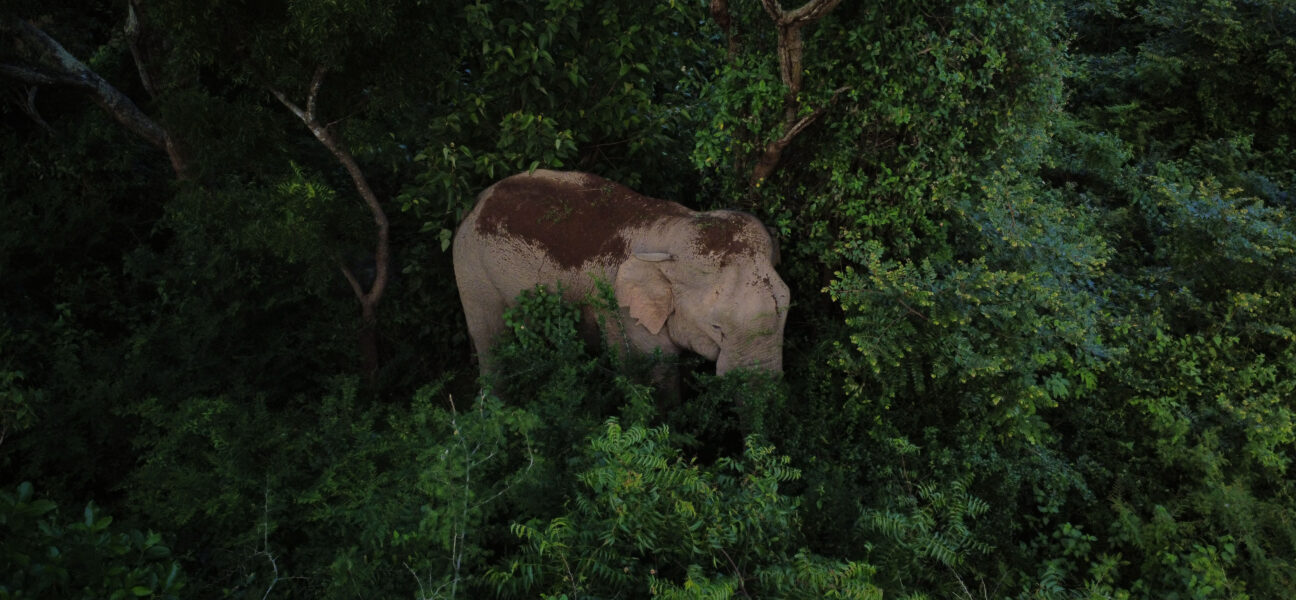
From above, the land looked quiet.
A drone shot revealed a small patch of ground where three elephants had chosen to rest. At the center was a single male elephant who had been living in that area for nearly two weeks, accompanied by two other male elephants. By day, they stayed there in stillness, conserving their strength, hiding from the heat, and waiting patiently for darkness.
But the nights told a different story.
To the villagers, the pattern was both familiar and frightening.
Every evening brought uncertainty.
Every night carried the fear of broken fences, destroyed gardens, and the heavy footsteps of giants moving through the dark.
And every morning, the elephants were there again — calm, quiet, almost peaceful in the daylight, as though the chaos of the night belonged to another world.
The scene was a reminder of the difficult struggle between humans and elephants. These were not cruel animals acting out of malice. They were wild males, moving together, following instinct, driven by hunger and the shrinking boundaries of their natural habitat. Yet for the villagers, the damage was real, and the fear was real too.
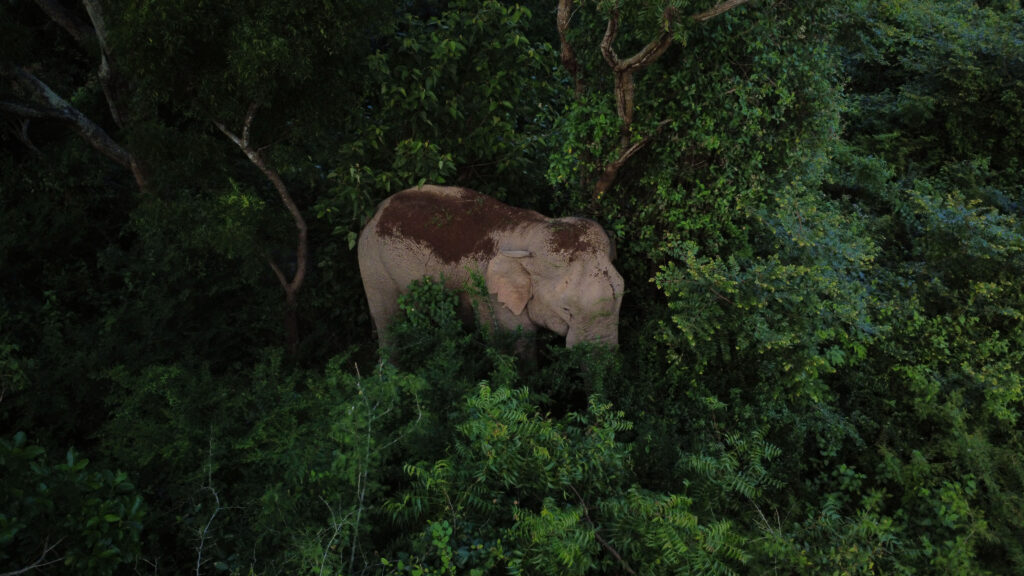

The drone captured more than just elephants resting on open land.
It captured a story of tension, survival, and conflict.
Three bulls in a small daytime refuge.
A village living in fear after sunset.
And a silent cycle repeating itself — night after night in Ulpothagama.
3 Comments