

The evening road to the forest was usually silent, except for the wind moving through the dry grass and the distant calls of birds returning home. But on this day, the silence was broken.
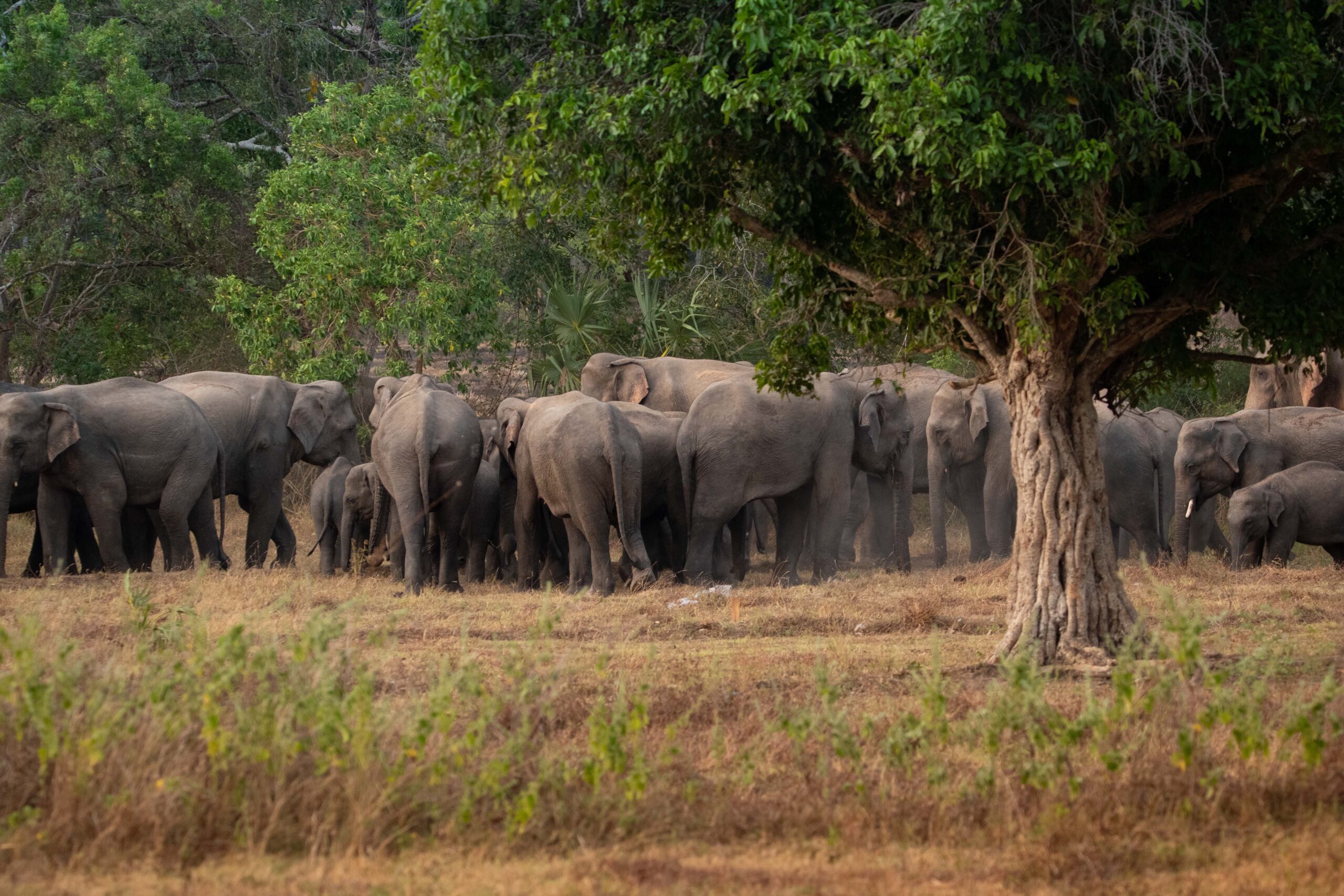
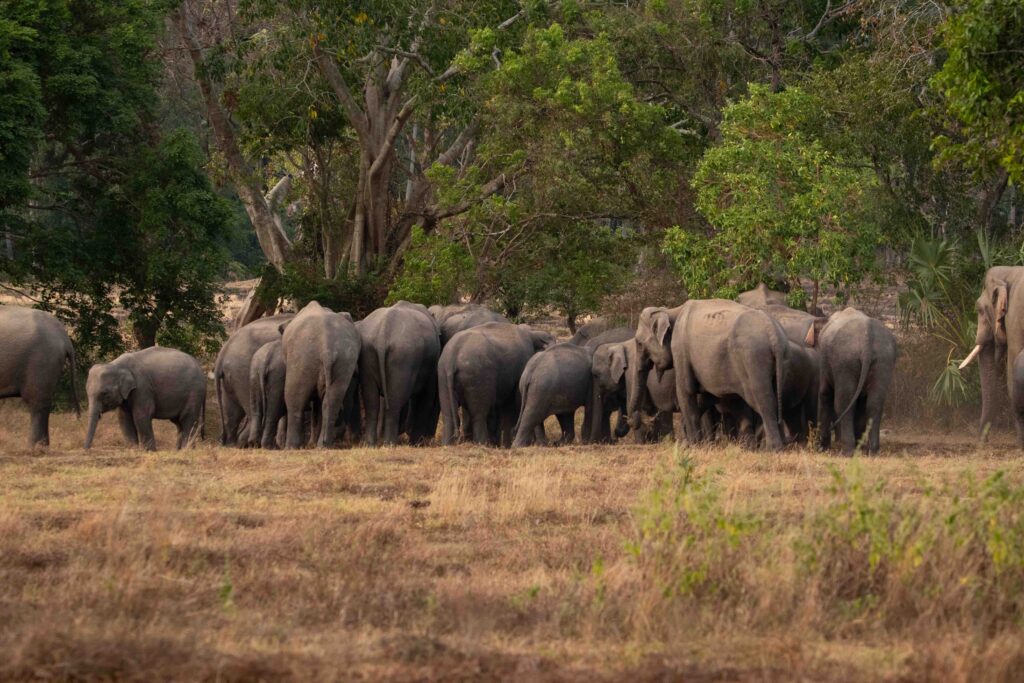
A herd of more than fifty elephants was moving slowly toward the forest. Among them were mothers, calves, young bulls, and at the front stood the great tusker Manabarana — calm, powerful, and watchful. He was not just walking with the herd. He was guarding them.
The elephants had followed an old path, a path their ancestors had used long before roads, fences, houses, and crowds came into their world. But that day, the path became narrow. The herd was trapped in a small area, unable to move forward freely and unable to turn back safely.
Fear spread through the herd.
The calves stayed close to their mothers. Some elephants lifted their trunks, smelling danger in the air. Manabarana stood tall, his tusks shining in the fading light, his ears open, his eyes fixed on the people gathering around them.

At first, villagers came to see. Some watched quietly. But soon the crowd grew louder. Some shouted. Some moved too close. Some disturbed the elephants, forgetting that these were not performers, not attractions, not enemies — they were living beings trying to reach their home.
The herd became restless.
Dust rose from the ground as the elephants shifted nervously. A mother elephant pushed her calf behind her. Another elephant trumpeted, not in anger, but in fear. They did not want to attack. They only wanted space. They only wanted the forest.
Manabarana stepped forward.
For a moment, the crowd became silent.
The great tusker did not run. He did not charge. He simply stood between the herd and the danger, like a king protecting his people. Behind him, fifty innocent lives waited, confused by the noise of humans and the shrinking space around them.
His message was silent but clear:
“Let us pass. We are going home.”
That day at Palukadwala was not just a story about elephants trapped in a small area. It was a story about how easily curiosity can turn into cruelty. It was a reminder that the forest paths belong not only to humans, but also to the giants who walked this land long before us.
Manabarana and his herd did not ask for trouble. They asked for a way back.
And sometimes, the greatest kindness humans can show is not to come closer, not to shout, not to chase — but to step back and let the wild return safely to the wild.
Because elephants do not forget fear.
And the forest never forgets those who protect it.